International Workshop: Intellectual Furniture. A (Pre-)History of Large Language Models
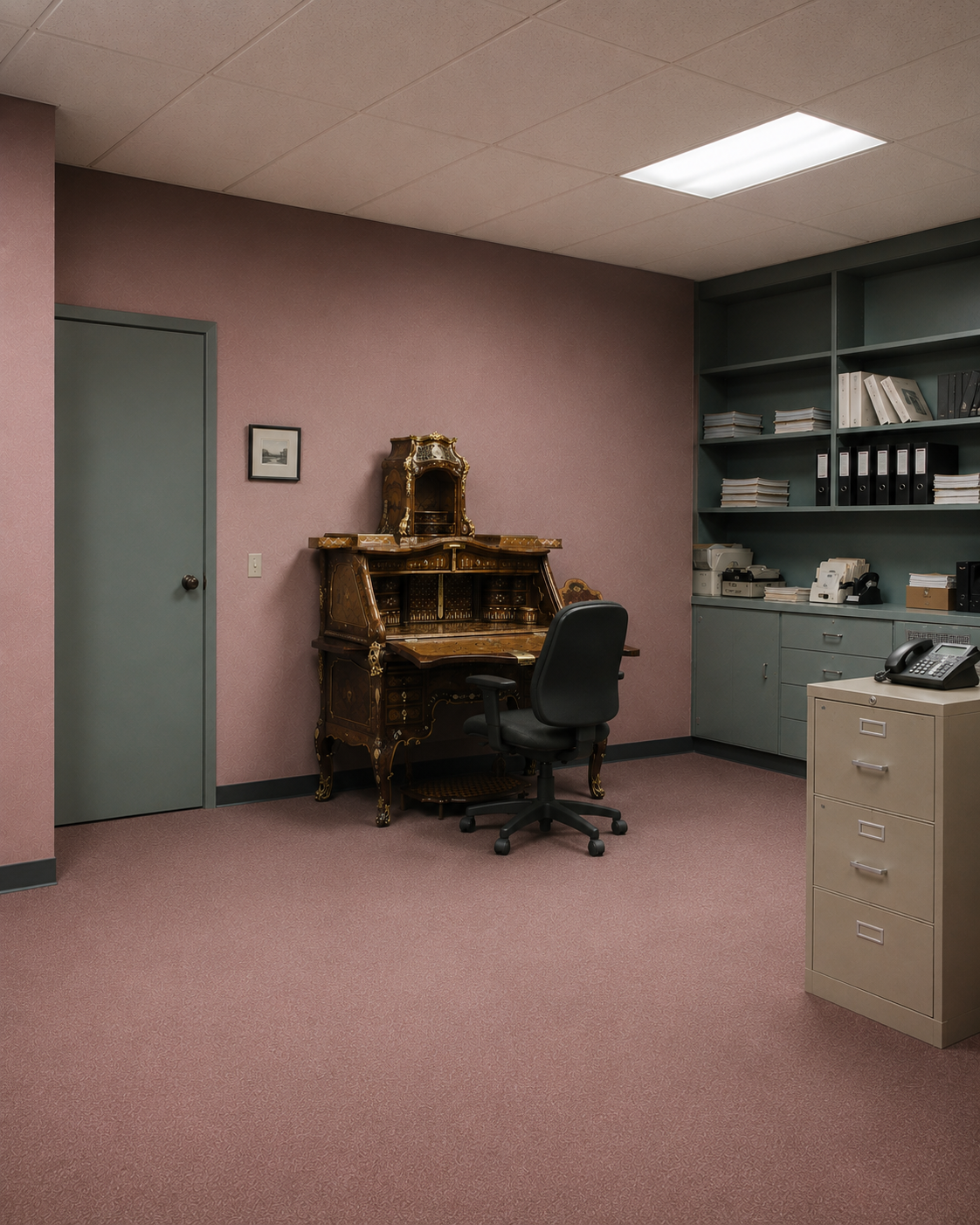
Intellectual Furniture. A (Pre-)History of Large Language Models
10.–12. September 2026
eikones Forum, Rheinsprung 11, 4051 Basel, Switzerland
Abstract
With a retrospective look on the long media history of artificial intelligence focussing on scholars/literary authors and their writing aids, we will sound out the differences as well as the similarities between historical ways of interacting with »intelligent« devices (such as slip boxes, card catalogs, filing systems and alike) and the strategies of current interactions with AI models. While taking a look at the foundations of (electronic) computability as well as at varying constellations in which an actor, using specific rules and strategies, enters into an intellectual dialogue with a device in order to jointly arrive at new thoughts, the workshop indulges in different genealogies of devices to think with, surveying case studies, scenarios, histories and analytical accounts of intellectual furniture from the early modern period to the presence in order to discuss different types of »large language models« before and within the era of today’s AI models.
How can we conceive and describe the ways of interacting between author and the intellectual furniture as a dialogue partner while finding new constellations of knowledge? Which theoretical approaches prove to be most promising to analyze the (mechanical) intelligence built into the devices? What concepts of agency help to scrutinize the emergence of inspiration during the human-machine-interaction?
The workshop brings together scholars and historians of note-taking and media devices with curators and art historians with an expertise in writing desks and intellectual furniture of all kind in order to carve out the main lines and avenues of the precursors of today’s large language models.
Program
Download the workshop poster with the full program here.
Thursday, September 10.
14:00–18:00
14:00–14:30 Welcome & Introduction
14:30–15:30 Ewa Zakrzewska, European University Institute, Florence
Calculating Notions: The Mechanical and the Mindful in 17th century Combinatorial Repositories
15:30–15:45 Coffee Break
15:45–16:45
Alberto Cevolini, University of Modena and Reggio Emilia
The Age of the Artificial: From Early-Modern Filing Cabinets to Turing’s Machine
16:45–17:00 Coffee Break
17:00–18:00
Carolyn Sargentson, Independent Researcher
Touching Secrets: How Flesh and Metal Share Agency in Historical Artefacts
19:00 Invited Dinner
Friday, September 11.
09:00–18:30
09:00–10:00
Michael Friedman, University of Bonn
Editing Too Many Notes and Too Much Information: On Joachim Jungius’ (Posthumously Published) Manuscripts
10:00–11:00
Maja-Lisa Müller, University of Bielefeld
Embedded: The Many-Folds of the Walderdorff-Desk
11:00–11:15 Coffee Break
11:15–12:15
Mark Gamsa, Tel Aviv University
The Passion for Totality: Encyclopaedic Ambition and Its Instruments
12:15–13:15
Iris van der Tuin, Utrecht University
Susanne K. Langer’s Card-Index File as Integrative Object
13:15–14:15 Lunch Break
14:15–15:15
Craig Robertson, Northeastern University
»Automatic Memory«: The Filing Cabinet and Early Twentieth Century Efficiency
15:15–16:15
Daniela Helbig, University of Sydney
Lurking Monsters: On Blumenberg’s Machinery of Simulated Presence
16:15–16:30 Coffee Break
16:30–17:30
Markus Krajewski, University of Basel
Between Wood and Head: Scholars and Their Sparring Partners
17:30–18:30
Shannon Mattern, Metropolitan New York Library Council
The Inertia Apparatus: Furnishing Repose and Refusal
19:00 Invited Dinner
Saturday, September 12.
09:00–11:15
09:00–10:00
Hannah Wiemer, Humboldt University Berlin
Furnishing Language: Library 21 and the Material Organization of Knowledge in 1962
10:00–11:00
Yannick Nepomuk Fritz, University of Basel
Architectures of Reasoning and Modes of Conversation
11:00–11:15 Closing Remarks
Downloads & Registration
To attend, please register via email by September 3: yannick.fritz@unibas.ch.
Hosted by Assisted Thinking at the University of Basel and funded by the NOMIS foundation, Zurich.
Table of Contents
Similar Content

Call for Papers: Intellectual Furniture. A (Pre-)History of Large Language Models
March 4, 2026
Call for Papers Intellectual Furniture LLMInternational Workshop, University of Basel,
10.–11. September 2026
With a retrospective look on the long media history of artificial intelligence focussing on scholars/literary authors and their writing aids, we want to sound out the differences and also the similarities between historical ways of interacting with »intelligent« devices and the strategies of current interactions with AI models. While taking a look at the foundations of (electronic) computability as well as at varying constellations in which an actor, using specific rules and strategies, enters into an intellectual dialogue with a device in order to jointly arrive at new thoughts, the workshop indulges in different genealogies of devices to think with while asking for case studies, scenarios, histories and analytical accounts of intellectual furniture from the early modern period to the presence in order to discuss different types of »large language models« before and within the era of today’s AI models.

The research project »Assisted Thinking« pursues a long history of artificial intelligence by examining the interaction between scholars and their devices which help to organize their knowledge. This history spans a period of at least 350 years, gradually providing the building blocks that have led to the way that LLMs of the present function. The basic assumption of such a genealogical development is by no means to reconstruct the precursors of today’s technology of generative language models in a kind of teleological historiography, guided by the assumption that all these developments would have necessarily always culminated in LLM technology. Rather, the aim is to show how, under different technological conditions in past epochs, the relationships of users to their intellectual furniture have in each case led to new arrangements, practices, and descriptions that are characterized by the fact that jointly, through the interaction of humans and machines and through the distribution of their agency, they create an artificial intelligence in its own right.